Key Takeaways
- Artificial turf can stay out all fall and winter in Colorado, and the most useful work is one careful inspection before the first freeze.
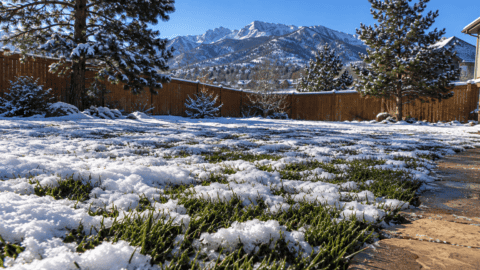
- Fort Collins normally gets 43.6 inches of snow from October through March, but only about 11 December days carry an inch or more, so snow cover comes and goes.
- Greenlawn Sod & Turf handles artificial turf maintenance across Northern Colorado, from the first inspection to the spring reset, and a free quote is the place to start.
Can You Leave Artificial Grass Out in the Winter in Colorado?
Yes, you can leave artificial grass out in the winter.
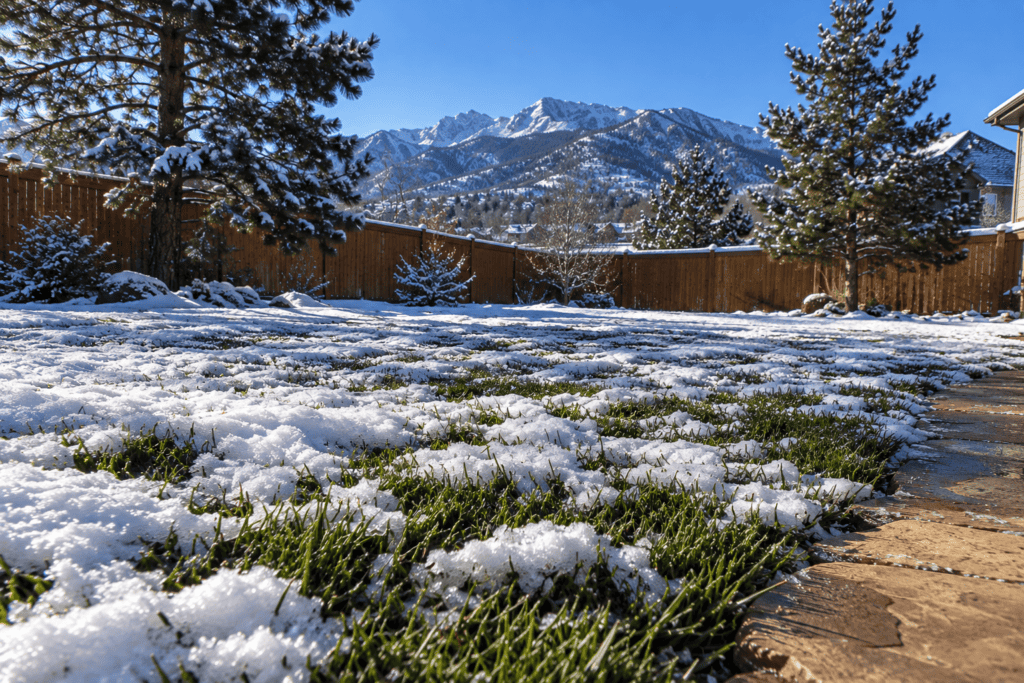
In most cases, we recommend letting snow and ice melt on their own and drain through the turf. Artificial turf is built to handle winter weather, and Colorado’s strong sun usually clears snow within a few days. Shoveling, scraping, or brushing it off can do more harm than the snow itself, because it can pull infill loose or damage the fibers.
Every turf product is a little different, though. If your manufacturer’s care instructions say something else, follow those first.Artificial turf in fall and winter mostly asks for patience, plus one honest look before the first freeze. Colorado’s cold season is real but uneven.
Colorado State University’s Colorado Climate Center puts Fort Collins’ snowfall normal for October through March, the 1991 to 2020 average, at 43.6 inches, with March the snowiest month.
Even so, a normal December there has only 11 days with an inch or more of snow on the ground, so turf often has little snow on it.
Winters swing widely, too: Fort Collins had 22.0 inches from October 2024 through March 2025, about half the normal.
The calendar is also drifting. Colorado State University climatologist Russ Schumacher reports that Front Range first freezes have generally shifted one to two weeks later since 1980, and first snow has moved later too.
He adds a caution about the snow data, though: “snow is very challenging to measure accurately,” so some of the later first-snow dates may reflect measurement changes.
For freezes, Fort Collins’ own record points the same way: the Colorado Climate Center reports a record 185-day frost-free season in 2024 and 181 days in 2025. October 2025 brought no snow at all there, and its hard freezes came late in the month.
Leaving turf out is not the same as ignoring it. The plan is simple: inspect in fall, leave snow alone in winter, and schedule the deep clean for spring.
What Should You Do to Artificial Turf Before the First Freeze?
Artificial grass fall maintenance comes down to one slow walk-through, done after most leaves have dropped and before a hard freeze or snow shows up in the forecast.
Go by conditions rather than the date, since freeze and snow timing has been shifting later.
Start with the spots most exposed to wear, shade, and runoff, then work through these seven checks.
- Debris. Clear leaves and other debris. In fall, clear it about weekly. Use a leaf blower on low throttle, aimed across the turf rather than straight into it, so infill stays put.
- Seams. Penn State treats a seam gap wider than 3 millimeters, about an eighth of an inch, as the point to call for repair. Hold a ruler across any gap you find, and call your installer if it is wider, because seam separation lets water and debris under the turf.
- Edges. Note any edge that has lifted or curled, since it can become a trip point.
- Infill. Look for thin spots and depressions, especially on paths, gates, and pet runs. Your manufacturer can tell you the right depth, and a professional can replenish and level thin spots.
- Slopes. On a sloped yard, check the downhill edge too, since the council says infill can migrate with the slope after heavy rain.
- Drainage. After the next heavy rain, note where water lingers.
- Shaded corners. Check damp, shaded spots, where the council says moss, mold, and algae can appear in underused turf. Catch any growth early and ask your installer about treatment, since spreading growth may call for rejuvenating the turf.
Anything that fails a check is easier to deal with before snow covers it. Greenlawn Sod & Turf can inspect the turf and recommend next steps.


Colorado's Sod Farm Since 1969
Premium natural sod & artificial turf, pickup or delivery across the Front Range. Family-owned and operated with over 100 years of combined turfgrass experience.
How Should You Handle Snow and Ice on Artificial Turf?
Leave snow and ice to melt on their own whenever you can. Artificial grass winter care mostly means resisting the urge to clear every flake.
Should You Clear Snow From Artificial Turf?
Only when you need the space. When snow has to move, the plow should leave a quarter to a half inch on the surface to avoid damage. The blade should be guarded with PVC pipe or rubber tips.
The remainder should melt on its own, because brushing it can pull infill out too.
At home scale, the equivalent is a plastic shovel held just above the surface, not a metal edge that scrapes.
The council also lists wire brushes and high-pressure sprays above 500 psi among the things that may damage turf, so leave both in the garage.
Clear a path right before you need it, not days ahead. For sports fields, the council’s working principle is to remove snow as near to game time as possible, because cold wind can ice a damp, newly cleared surface.
Can You Use Ice Melt on Artificial Turf?
We don’t recommend it unless your turf manufacturer approves a specific product. Most ice melts are made for concrete driveways and sidewalks, not plastic turf fibers and infill. Using a product your manufacturer hasn’t approved could also put your warranty at risk, so check your warranty before you put anything on the turf.
Patience usually works better. Thin ice and frost on turf tend to melt quickly once the sun is out. If you need a safe path before then, clear the snow with a plastic shovel right before you use it, and walk carefully.
Ice is harder to remove than snow, so the best approach is to keep it from building up. Clearing a path just before you need it, rather than days ahead, keeps a damp surface from refreezing.
Should You Cover Artificial Turf With a Tarp in Winter?
Not in freezing weather. Tarps other than vinyl or poly-coated ones can freeze to the surface and become very difficult to remove.
With snow handled, the remaining question is which jobs are worth hiring out.
Which Fall and Winter Artificial Turf Tasks Need a Professional?
Most fall and winter chores are homeowner jobs. Open seams, standing water, and uneven infill are the exceptions, and the table below sorts everything by season.
| Season | Task | Who handles it | Colorado timing cue |
|---|---|---|---|
| Fall | Clear leaves and debris | You | About weekly in fall, and again before snow is forecast |
| Fall | Check seams, edges, infill, and shaded spots | You, with an installer for repairs | Before the first hard freeze |
| Fall | Fix open seams or standing water that lasts for hours | Professional | As soon as you spot the problem |
| Winter | Let snow and ice melt | You | Most of the time, clearing only a path just before you need it |
| Winter | Keep tarps off | You | Whenever freezing weather is forecast |
| Winter | Watch drainage after storms | You | After heavy rain or a fast melt |
| Spring | Deep clean, brush, and replenish infill | Professional | After the last significant snow, since March is Fort Collins’ snowiest month |
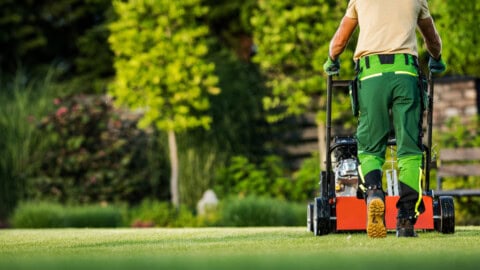
Routine brushing and spot cleaning follow the usual artificial turf maintenance steps, and the wrong cleaning tools and products can damage turf.
The choice between DIY and professional turf cleaning comes down to recurring problems such as odors that return, standing water, and matted turf.
If you would rather hand off the spring row, Greenlawn Sod & Turf does that work.
How Greenlawn Sod & Turf Helps Colorado Homeowners Care for Artificial Turf
Greenlawn Sod & Turf has grown sod in Northern Colorado since 1969 and holds an A+ rating from the Better Business Bureau. It maintains artificial turf in Fort Collins, Loveland, Greeley, Windsor, and Cheyenne, with service across Wyoming and neighboring states.
Its maintenance process begins with a consultation and an inspection of wear patterns, matted fibers, layout issues, and problem areas. That is much like the fall walk-through above.
From there, the team can deep clean and sanitize, brush matted fibers upright, compact the surface, and replenish or redistribute infill.
What You Should Do Next
Three steps get you ready for winter.
- Walk the turf this week. Check seams with a ruler, look for thin infill on busy paths, and note where water lingers after rain.
- Photograph anything that fails. Open seams, low spots, and standing water are easier to show an installer before the first snow.
- Get help where you need it. Request a free quote or contact Greenlawn Sod & Turf, and choose Artificial Turf Maintenance as the service interest. Plan an inspection now and a spring reset after the last snow.
FAQs
What tools can you use to clear leaves from artificial turf?
A leaf blower on low throttle clears dry leaves. For leaves that stick, a broom with plastic bristles or a plastic rake works without scratching the blades.
Skip metal rakes and wire brushes, which can scratch blades and pull fibers.
How often should you check artificial turf seams and edges?
About once a month, by walking the perimeter and seams and checking that the edges sit flat.
Why does water pool on artificial turf after heavy rain?
Standing water can mean something is blocking drainage, from clogged drains to debris in the infill.
If puddles last for hours, call a professional, who can tell whether the cause is surface debris, clogged drainage fabric, or a base problem.
Can DIY winter care affect your artificial turf warranty?
It can, depending on the terms. Read your warranty before trying a new tool or product. Keep the manufacturer’s care instructions where you can find them.
When is the best time to book professional artificial turf maintenance in Colorado?
For most homes, spring. Greenlawn Sod & Turf says most residential installations benefit from one professional visit a year, typically in spring.
March is Fort Collins’ snowiest month, with a normal of roughly nine inches, so a spring visit makes the most sense after the last significant snow.
Is frozen artificial turf slippery?
Ice is slippery on any surface, and frost or ice can form on turf like anything else outdoors.
Thin frost or ice usually melts quickly once the sun is out. Until it does, walk carefully and do not scrape it with metal tools.